



Wayne Lennington
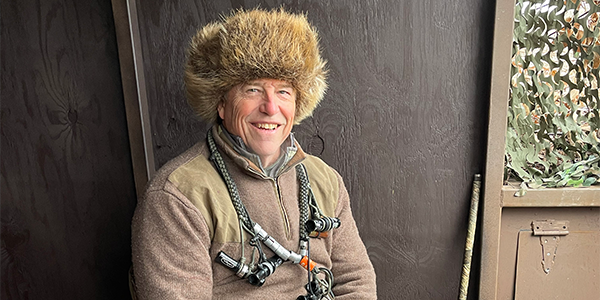
Wayne Lennington attributes the genesis of his winding pathway to becoming a duck hunter to a small watering hole for goats.
The now-retired physician grew up in east-central Indiana in the 1970s, in what was a virtual dead zone for ducks and geese.
"Man, there was no duck hunting," Lennington lamented. "I only knew one person who duck hunted. He was our neighbor who lived kitty-corner across the street from me. I don't know where he hunted, but I always thought all the stuff he had for duck hunting was cool. I used to read about it in Field & Stream and Outdoor Life, but I never duck hunted growing up."
Instead, young Lennington stalked squirrels, rabbits, and quail, and started trapping muskrats and mink in a couple of small creeks. Then, fate struck to further heighten his interest in waterfowl.
"When I was in high school, I went to my uncle's woodlot to squirrel hunt, and he had this little pond for his goats," Lennington recalled. "I walked up to that gate to go in, and a drake pintail flushed out of that pond. I was like 'holy cow!' Other than mallards at a park, that was the first duck I'd ever seen. So, duck hunting was something I had always wanted to try."
Still, his entry to waterfowl hunting would have to wait.
Lennington completed medical school at Indiana University in Indianapolis, then moved to Nashville, Tennessee, to complete his residency at Vanderbilt University Medical Center.
While there, Lennington learned that the husband of a lab technician co-worker hunted ducks. Then 27 years old and a budding pathologist, Lennington finally found himself enjoying a long-awaited morning in a duck blind.
"So, I went duck hunting with my co-worker's husband, and it was over-that was it," Lennington said. "We didn't shoot a duck. We saw six mallards and flared them."
He was decidedly undeterred by a lack of success on his first hunt.
"The next thing I knew I had water-keel decoys, made a PVC blind, and I talked one of my professors into duck hunting," Lennington said. "He had a bass boat, and we went on the reservoirs near Nashville. If you killed a duck it was a miracle. If you killed three, it was the holy grail of duck hunting. We evolved and started getting into draw hunts north of Nashville."
His humbling start as a duck hunter aside, Lennington has always been driven in life, whether he was building a medical laboratory business or enhancing a duck club such as the one he now owns near Wynne, Arkansas.
Fortunately for ducks and duck hunters, Lennington harbors a strong conservation ethic and a history of philanthropy. He's been a Delta Waterfowl donor since 1991, when he first heard about Adopt-a-Pothole, a Delta Habitat Conservation program that linked duck hunters to a farmer on the prairie duck breeding grounds.
Lennington believes strongly in actively managing habitat to boost waterfowl production.
"When the Delta Waterfowl opportunity came up-specifically related to trapping and Predator Management-I'm all in," he said. "You probably don't need predator control in great habitat. But just because we're conserving habitat, it's not all the same. Conditions have clearly changed in the prairie. There weren't skunks and raccoons, but we changed it with buildings and towns and drainage ditches, so now they've got a foothold there. A lot of the habitat being conserved is not great habitat. So, if you have ducks trying to nest in poor habitat, you end up in a predator sink. When 200 ducks go into an area to nest and only 100 come out to fly south, that's diminishing returns. If you have a functioning trapping program, 200 go in and thousands can come out to fly south."
Lennington recently committed to a major gift that will endow a Predator Management site in perpetuity as part of Delta's Million Duck Campaign. Delta's Predator Management program currently produces tens of thousands of ducks annually, marching toward an MDC goal of contributing about 750,000 ducks to every fall flight. Delta's Hen House program will account for another 250,000 ducks each year to reach the overall MDC goal of 1 million ducks.
"I decided to step up with a longer-term commitment," Lennington said. "I like the fact that Delta is pro-waterfowl hunting. I want my kids and grandkids to be able to go duck hunting. No one is going to look out for the resource except for people who hunt. Nobody else cares."
Support from major donors is critical to ensure the future of waterfowl hunting throughout North America.
"Wayne Lennington epitomizes the avid hunter and angler conservationist who truly believes in giving back much more than they take," said Scott Vance, development director for Delta Waterfowl. "By giving to Delta, he knows his commitment will create a legacy of ducks and duck hunters forever." -Paul Wait


 I need more information about ways to give
  I already know how I would like to give